

Scroll down
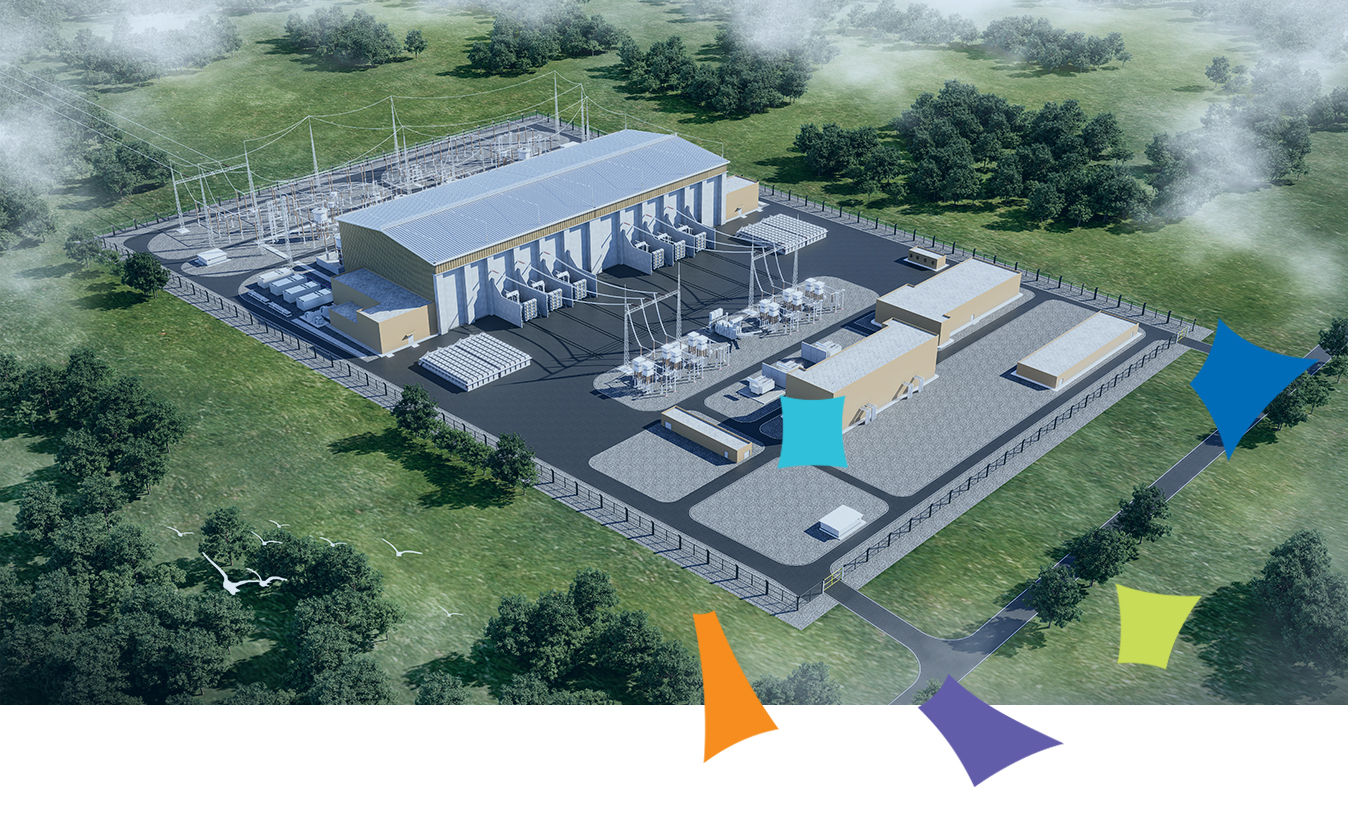
HVDC: Pioneering the future of energy transmission
As many countries become increasingly reliant on renewable energy, it has become paramount to source efficient and reliable electrical power transmission solutions. One of the most viable ways of transmitting electricity over longer distances that has found prominence in recent years is High Voltage Direct Current (HVDC) technology.
Unlike traditional Alternating Current (AC) systems, HVDC minimizes energy losses and instead enables electrical power transmission by using direct current (DC) at high voltage levels. This makes HVDC particularly advantageous for long-distance transmission and cross-border interconnections. Consequently, it reduces the number of electrical substations needed to transmit energy across countries and lessens its environmental impact. Furthermore, HVDC is considered the optimal solution for connecting different frequency grids, as demonstrated by the ongoing project linking Saudi Arabia and Egypt.
Delivering electricity across long distances is crucial for businesses and communities, as energy is at the heart of critical infrastructure. Many industrial and residential developments are being built in the Middle East and Africa, which all need reliable energy networks. This article aims to explore the key benefits of HVDC technology, any challenges that may occur during the implementation process, and how it can help shape more sustainable energy solutions.
Key benefits of HVDC technology
When considering the cost of using HVDC or High Voltage Alternating Current (HVAC) for long-distance transmission system, HVDC is generally more cost-effective than HVAC for distances greater than 600 kilometers. This is due to HVAC often experiencing high losses in power and needing expensive reactive power compensation. The greater efficiency of HVDC allows for long-distance electricity transmission without limitations, decreasing the need for multiple substations across countries, which leads to cost savings while also benefiting the environment.
From a technical standpoint, HVDC systems enable the interconnection of asynchronous networks or those operating at different frequencies while allowing power transmission in either direction. However, the most significant advantages of implementing HVDC technology focus on sustainability and energy efficiency.
In addition, when evaluating the stability of HVDC and HVAC transmission systems under fault conditions, the results demonstrate that the voltage system remains stable when utilizing HVDC transmission in conjunction with HVAC systems. Analysis indicates that HVDC systems provide better voltage regulation and faster fault recovery, ensuring minimal disturbance to the overall grid stability compared to traditional HVAC systems. This stability is particularly evident in scenarios involving sudden faults, where the HVDC system can rapidly restore voltage levels, thereby enhancing the reliability and efficiency of the transmission network.
What’s more, HVDC systems have had a big role to play in supporting smaller, sustainable energy sources and this is only set to continue. They have become an ideal solution for transmitting power from remote renewable energy hubs, such as offshore wind farms, wind energy power plants and desert solar power plants, to urban and industrial centers. This not only utilizes renewable energy but ensures that it is not wasted following the production process, making it more reliable and appealing.
Along with providing a route to better energy efficiency, HVDC technology makes energy networks more reliable. This is particularly important in volatile or remote environments, which include desert or offshore power distribution centers. For example, HVDC prevents cascading failures, making energy networks robust when facing fluctuations in demand or unforeseen outages. Furthermore, HVDC systems can also be used to precisely manage power flow.
Challenges in implementing HVDC technology
While HVDC systems offer numerous benefits that support sustainable energy initiatives, any attempt to deploy the technology does come with challenges and potential pitfalls. The most prominent concerns are often associated with expense and expertise.
- Converter Station Complexity: HVDC requires sophisticated converter stations at both ends of the transmission line to convert AC power to DC and back again. These stations are expensive due to the advanced electronics and high-capacity transformers required. These substantial costs when developing and installing HVDC converter stations can be a cause for alarm in the initial stages of a project’s development, with meticulous planning required to make any implementation a success.
- High Initial Costs: The capital cost for establishing HVDC systems is significantly higher than HVAC (Alternating Current) systems, mainly due to the need for specialized equipment like converters, rectifiers, and inverters, as well as infrastructure for long-distance transmission. In connection with the costs involved, integrating HVDC technology with any existing infrastructure requires strong engineering knowledge and experience. Many power systems worldwide are built using AC, but unlike AC, HVDC does not rely on frequency. This difference must be considered when transitioning to HVDC technology, and this will take a team with specific expertise to make such a change successful.
- Operational and Maintenance: The need for expertise is true for maintenance. Investing in this technology is expensive, so it must be supported following initial deployment.
- Limited Range of Application: HVDC technology is most beneficial for long-distance, high-capacity transmission lines. However, it is less effective in short-distance transmission due to its higher upfront costs and the complexity of the system.
Alfanar Projects’ commitment to HVDC technology
Alfanar Projects’ commitment to HVDC technology has been highlighted through our recent partnership with China Electric Power Equipment and Technology Co. Together, as part of our strategic contracts with the Saudi Electric Company, we aim to deliver the largest HVDC converter station in the Middle East and North Africa. This project is aligned with Saudi Vision 2030 and will facilitate high-capacity power transmission between the central, western, and southern regions of the Kingdom of Saudi Arabia, with a total capacity of 7 GW.
Our ability to manage complex, innovative, and large-scale projects is shown through our completed and ongoing work, which includes major collaborations on HVDC interconnectors and renewable energy transmission systems. This also highlights our commitment to using solutions that support renewable energy providers.
The future role of HVDC in energy transmission
The energy landscape is evolving rapidly, and HVDC technology will continue to play a critical role in advancing power transmission. HVDC interconnectors facilitate energy sharing between countries, which optimizes energy resources and helps shape global cooperation on energy transition goals. By enabling efficient, reliable, and sustainable energy delivery, HVDC systems support global efforts to build a resilient energy infrastructure.
At Alfanar Projects, we are committed to embracing HVDC technology and driving the adoption of these solutions. Together with our partners, we are building a future powered by sustainable and reliable energy networks.